

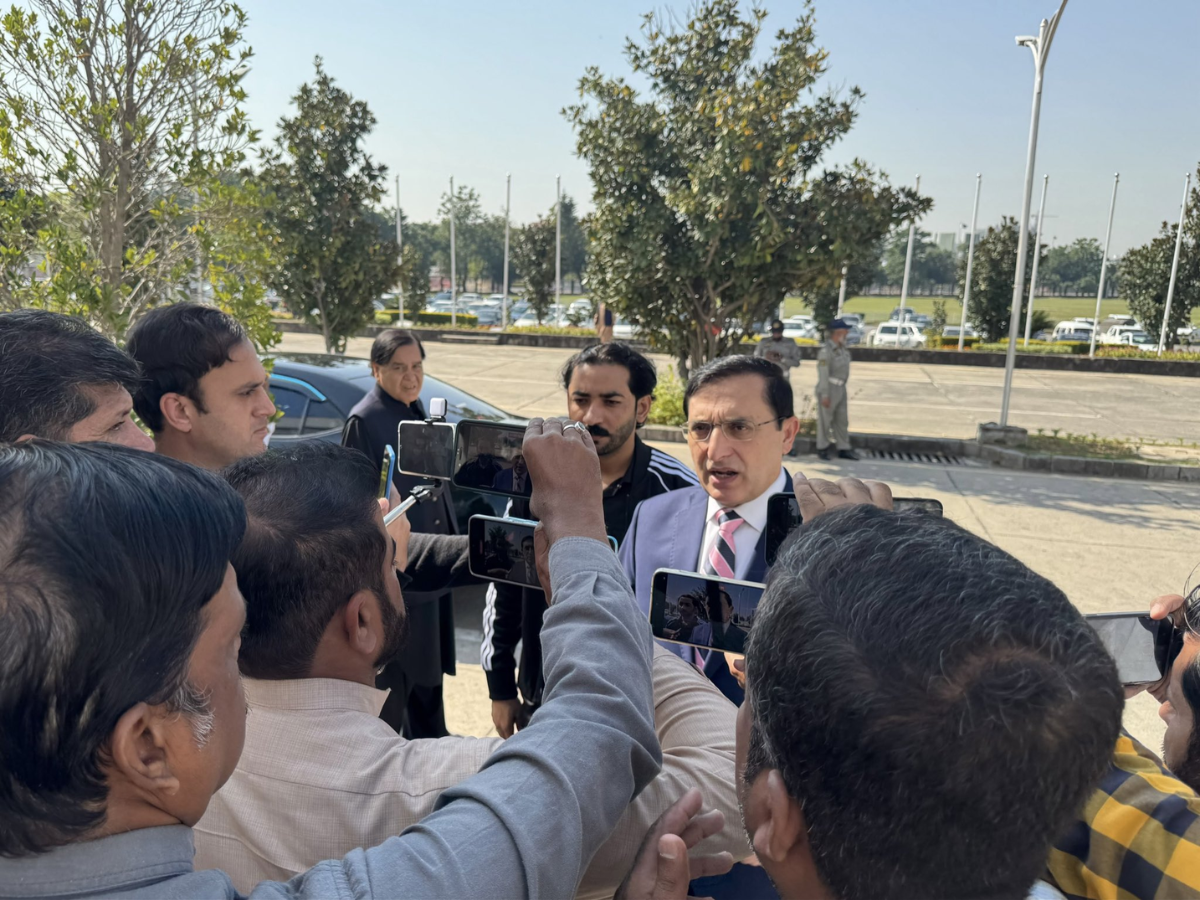
Pakistan Tehreek-e-Insaf (PTI) Chairman Barrister Gohar Ali Khan called for the immediate resumption of meetings with party founder Imran Khan on Tuesday, saying restrictions on access to him had continued for 375 days.
Speaking to the media outside the Parliament, Gohar said the restrictions on meetings with Imran should be lifted immediately, as Tuesday was a designated day for such meetings. “Today is the day for meeting the PTI founder, and the meeting should take place,” he said.
He said keeping Imran in jail without allowing him to meet his family is “inhuman treatment”. Gohar further maintained that the political situation could have improved if meetings with the PTI founder had been held regularly.
He said restrictions on meetings had created complications in political affairs, while political tensions and political victimisation continued to increase.
چیئرمین پاکستان تحریک انصاف بیرسٹر گوہر خان آج پارلیمنٹ ہاؤس کے باہر میڈیا سے گفتگو کر رہے ہیں-
عمران خان صاحب سے ملاقاتوں کی بندش کا سلسلہ فوری طور پر ختم ہونا چاہیے۔ گزشتہ ایک سال سے زائد عرصے سے ملاقاتیں نہ ہونے کے باعث نہ صرف سیاسی معاملات میں سنگین پیچیدگیاں پیدا ہوئی ہیں… pic.twitter.com/1ubdwx9d6a
— Barrister Gohar Khan (@BarristerGohar) October 27, 2026
The PTI chairman also accused political opponents of taking undue advantage of the emergency and governor’s rule in Khyber-Pakhtunkhwa (K-P). He said all details concerning the emergency and governor’s rule would be presented during a parliamentary meeting attended by senators and members of Parliament.
Read: Opposition leaders criticise govt over stalled talks, restrictions on parliamentarians
Turning to political dialogue, Gohar stressed that negotiations with the government were necessary to resolve political issues. “Political problems can only be resolved through negotiations,” he said, calling for early and meaningful talks with the government.
He reiterated that dialogue remained the only way to resolve political disputes.
PTI accuses govt of political vendetta
A day earlier, Gohar accused the federal government of using governor’s rule and the imposition of an emergency in K-P as a pretext for political victimisation.
He said the party rejected both governor’s rule and the emergency, while emphasising that there could be no disagreement over the need to eliminate terrorism. However, he alleged that the measures were being used to target the PTI rather than address the province’s security challenges.
“You have imposed governor’s rule and an emergency, both of which we reject. Terrorism must be eliminated; there can be no two opinions on that,” he said.
The PTI chairman also condemned the 30-day extension in the detention of party founder Imran’s sisters, adding that Aleema Khan was a non-political figure but had nevertheless been subjected to a further 30 days of detention. He said 12 PTI members of the National Assembly were being held, while the party had no information about the whereabouts of its chief minister.
Deadlock on emergency and governor’s rule in K-P
The debate over emergency and governor’s rule in K-P intensified in late September amid worsening security concerns and growing political tensions between the federal government and the PTI-led provincial administration.
Federal ministers accused the provincial government of failing to address terrorism and governance challenges, while PTI considered the possibility of an in-house change or dissolution of the provincial assembly.
The federal government subsequently stepped up its warnings, with Law Minister Azam Nazeer Tarar and other officials arguing that constitutional provisions allowed the Centre to intervene if circumstances warranted extraordinary measures. The government cited the deteriorating law and order situation and the provincial administration’s handling of security challenges as precursors for governor’s rule and emergency.
Later, on October 11, President Asif Ali Zardari approved the imposition of emergency and governor’s rule in the province on the advice of Prime Minister Shehbaz Sharif, following approval by the federal cabinet. The government cited escalating terrorist attacks, threats to lives and property, and what it described as a breakdown of the constitutional system in the province.
The measures invoked Articles 232 and 234 of the Constitution, while the federal government also authorised the deployment of the army to assist the civil administration.