

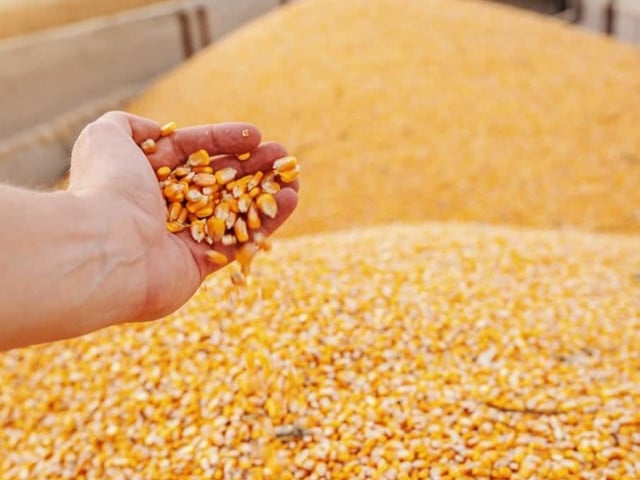
Non-genetically modified (non-GMO) corn is grown in Pakistan that should fetch a premium in international markets, but due to problems related to harvesting, poor handling and storage, it is being sold at prices 10% to 15% lower than market rates.
This was stated by Louis Dreyfus Company (LDC) Country Head and Head of Grains and Oilseeds Muhammad Daniyal while speaking to The Express Tribune. He said the lower price of corn was not due to its quality but because of excess moisture and other impurities present in the crop.
Daniyal stressed that the purpose of LDC’s entry into Pakistan was to provide access for the country’s surplus agricultural commodities to international markets in accordance with required standards and to ensure that local farmers receive an appropriate price for their crops.
He believes Pakistan has significant potential to increase agricultural production and sell its commodities in international markets because of its irrigation system. However, improving agricultural infrastructure and standardising post-harvest storage and logistics are essential for achieving this potential.
Daniyal said Pakistan produces non-GMO corn, which commands a higher price globally. However, because farmers do not have adequate systems for drying corn, storing it in suitable facilities and transporting it to markets, Pakistani corn is often not purchased in international markets in the first place. If a buyer is willing to purchase it, they enter into agreements at prices 10% to 15% below prevailing market rates.
Explaining how this important issue can be addressed, Daniyal said Pakistan produces corn of excellent quality. If the systems for harvesting, drying and storing corn, as well as its marketing, are brought in line with required standards, Pakistan could earn millions of dollars through this initiative.
He said the issue was directly linked to the lack of basic infrastructure. To help address grain-storage problems to some extent, LDC has established its first silage storage facility near Multan, where 40,000 tonnes of grain, including wheat, corn and rice, can be safely stored according to international standards.
The purpose of establishing the silage storage facility in Punjab’s agricultural region is to preserve the surplus production available in the area. Daniyal said “where there is surplus production, the chances of the produce being wasted are also higher. Therefore, better storage will help maintain quality from the very first day”.
He said that once grain is harvested, it should immediately be placed in facilities with proper air circulation and moisture-control systems. This helps minimise losses and preserve quality. As a result, Pakistani wheat and corn can become more competitive in international markets, while local processors can receive a more stable supply.