

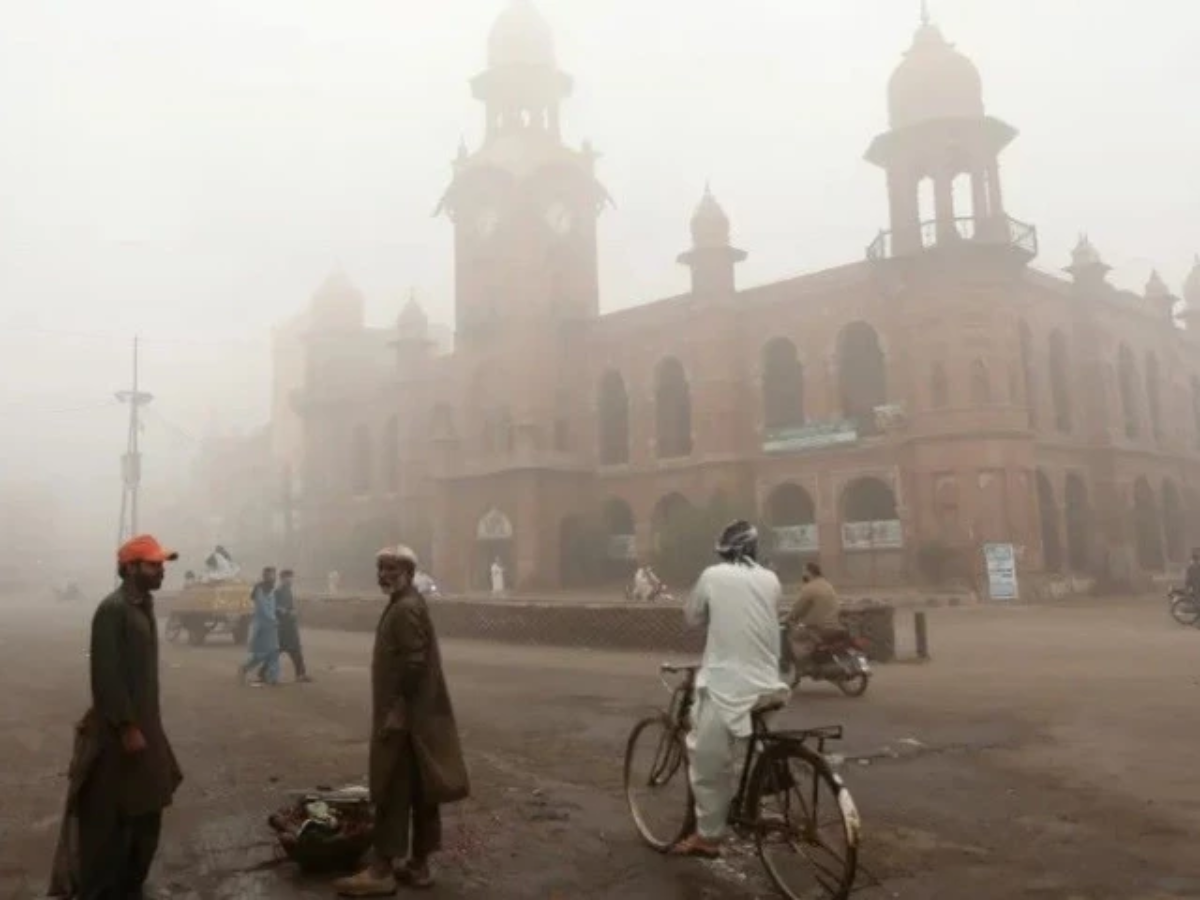
Lahore once again ranked as the world’s most polluted major city on Friday morning as its air quality slipped into the “unhealthy” category, prompting Punjab authorities to intensify anti-smog operations across the provincial capital’s pollution hotspots.
The city recorded an air quality index of 167 on IQAir’s live global ranking earlier in the day, placing it ahead of Dhaka at 164 and Cairo at 158. Provincial authorities later put Lahore’s AQI at 236, saying weak wind movement and lower temperatures had contributed to the accumulation of pollutants.
Officials said winds were blowing from the southeast, with speeds expected to remain between five and six kilometres per hour from 8am until noon before increasing to eight to 10 kilometres per hour between 1pm and 2pm.
The expected increase in wind speed could help disperse pollutants and improve air quality later in the day, they said.
IQAir’s rankings are updated hourly, meaning a city’s position and AQI can change significantly during the course of a day. Lahore’s ranking had consequently shifted from the top position recorded earlier in the morning as atmospheric conditions changed.
Figure shows the top-ranked polluted cities according to IQAir. PHOTO: SCREENGRAB/IQAir
The deterioration triggered an emergency response in high-AQI parts of Lahore on the directives of Punjab Chief Minister Maryam Nawaz Sharif, according to the provincial government.
Smog guns remained operational in pollution hotspots, while water bowsers and sprayers were deployed to suppress road dust.
Officials said water sprinkling operations were underway along the Ring Road service line in the Hando area, GT Road near UET and Shalimar Town, as well as Burki, DHA and Multan Road.
Drone squads, night squads and the government’s “Hawk Eye” field teams were also conducting round-the-clock monitoring of pollution sources, authorities said, with enforcement teams directed to take immediate action against violations.
The provincial government also reported a series of enforcement actions across Punjab during the previous 24 hours.
Read: Air pollution in Lahore, Punjab cities reaches ‘hazardous’ category
According to official figures, environmental teams inspected 319 industrial units, sealing 15 facilities and registering one first information report over alleged violations of environmental regulations. Fines totalling Rs1.65 million were imposed.
Authorities also inspected 421 brick kilns, demolished five and sealed eight, while five FIRs were registered. Officials said penalties worth Rs1.5 million were imposed for violations as part of the province’s smog-control action plan.
A separate crackdown on substandard plastic resulted in inspections at 267 locations, with authorities confiscating 1,248 kilogrammes of plastic. Six locations were sealed, and fines of Rs117,000 were imposed.
Commercial cooking operations have also come under scrutiny as authorities seek to curb smoke emissions. Officials said 249 barbecue and commercial cooking sites were inspected. Suction hoods had been installed at 88 locations, while 28 establishments were sealed.
Crop burning watch
With the harvesting season underway, the government also intensified efforts to prevent farmers from burning crop residue, a practice associated with seasonal deterioration in air quality across the region.
Officials said paddy had so far been mechanically harvested across 724,900 acres out of Punjab’s total 6.33 million acres under the crop, representing around 11.5% of the area.
The government said 437,445 notices had been issued to farmers as part of efforts to discourage crop-residue burning.
According to official data, 1,259 Kubota machines had harvested 310,196 acres while 187 balers had covered another 94,124 acres.
The provincial administration said that around 10,000 Super Seeders were now being used by farmers to manage crop residue without setting it on fire and to encourage more environmentally sustainable farming practices.
Read more: Lahore tops world pollution rankings
Senior Provincial Minister Marriyum Aurangzeb warned farmers against burning crop residue and urged residents to avoid activities that contribute to smog. She said enforcement, monitoring, and preventive operations were being carried out simultaneously because weak winds had made it more difficult for pollutants to disperse.
“Farmers must not set crop residue on fire, and citizens should refrain from every activity that causes smog; otherwise the law will come into action,” she said, according to the official statement.
She added that no one would be allowed to pollute the environment.
Air pollution has emerged as a persistent environmental and public health challenge in Lahore, particularly during the cooler months when stagnant atmospheric conditions can trap emissions closer to the ground.
Industrial emissions, vehicular pollution, crop-residue burning, and weak air movement are among the factors frequently associated with Lahore’s recurring smog episodes.