

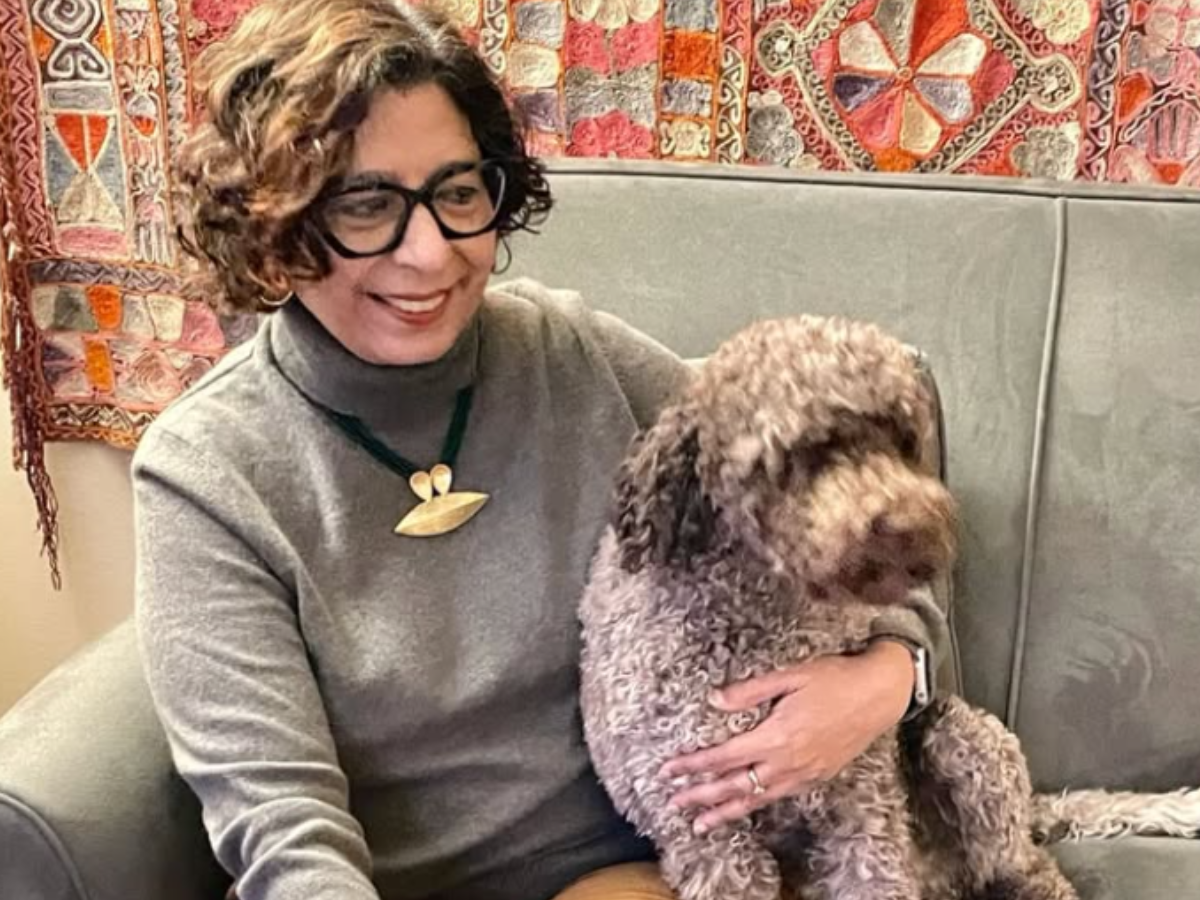
Urdu is not something Dr Mehr Afshan Farooqi, daughter of Shamsur Rahman Faruqi, first encountered in a classroom. It is something she remembers hearing, speaking, and breathing long before she ever thought of it as an academic discipline.
Her father remains one of the most influential Urdu literary critics of the modern era. Today a professor of Urdu and South Asian Literature at the University of Virginia, Dr Mehr has built a career around a language that shaped her earliest sense of the world.
Yet her journey into academia was not a straightforward inheritance. It was shaped as much by privilege as by a quiet resistance to living in the shadow of her father’s towering intellectual legacy.
Her childhood in Allahabad was steeped in books, poetry, and conversation. “My parents taught me to memorise and recite Urdu couplets from the moment I could speak,” she recalls, describing a home filled with literature, visits to old bookstores, and late-night gatherings where she would sit quietly, absorbing it all.
View this post on Instagram
Despite this deeply immersive upbringing, Dr Mehr initially resisted following the same intellectual path. Determined to define herself independently, she pursued a Master’s degree and later a PhD in medieval Indian history. But distance did not dilute her connection to language; it sharpened it. Eventually, she returned to the literary world she had grown up in.
Today, she is recognised as a leading scholar in her own right, best known for her acclaimed work on the 19th-century poet Mirza Ghalib. Her research revisits Ghalib’s mustarad kalam—the verses he chose not to include in his published collections—offering a more intimate look at his creative process.
She describes this as a sophisticated act of self-editing, shaped by a period of major cultural and technological transition. “Ghalib was writing at a time when the printing press was revolutionising literature,” she explains.
Beyond scholarship, Dr Mehr is also vocal about how Urdu is positioned in contemporary discourse. She criticises attempts to confine the language to a single religious identity, arguing instead for a more expansive understanding of its cultural roots. “Urdu belongs to the soil of India, not to any single religion,” she says.
Despite concerns about institutional neglect, she remains hopeful about the language’s future. In her view, Urdu’s survival will depend less on official patronage and more on public engagement.
With the help of digital platforms, social media, and private initiatives, she believes a new generation can be inspired not only to appreciate Urdu’s beauty but also to actively read, write, and preserve its script.