

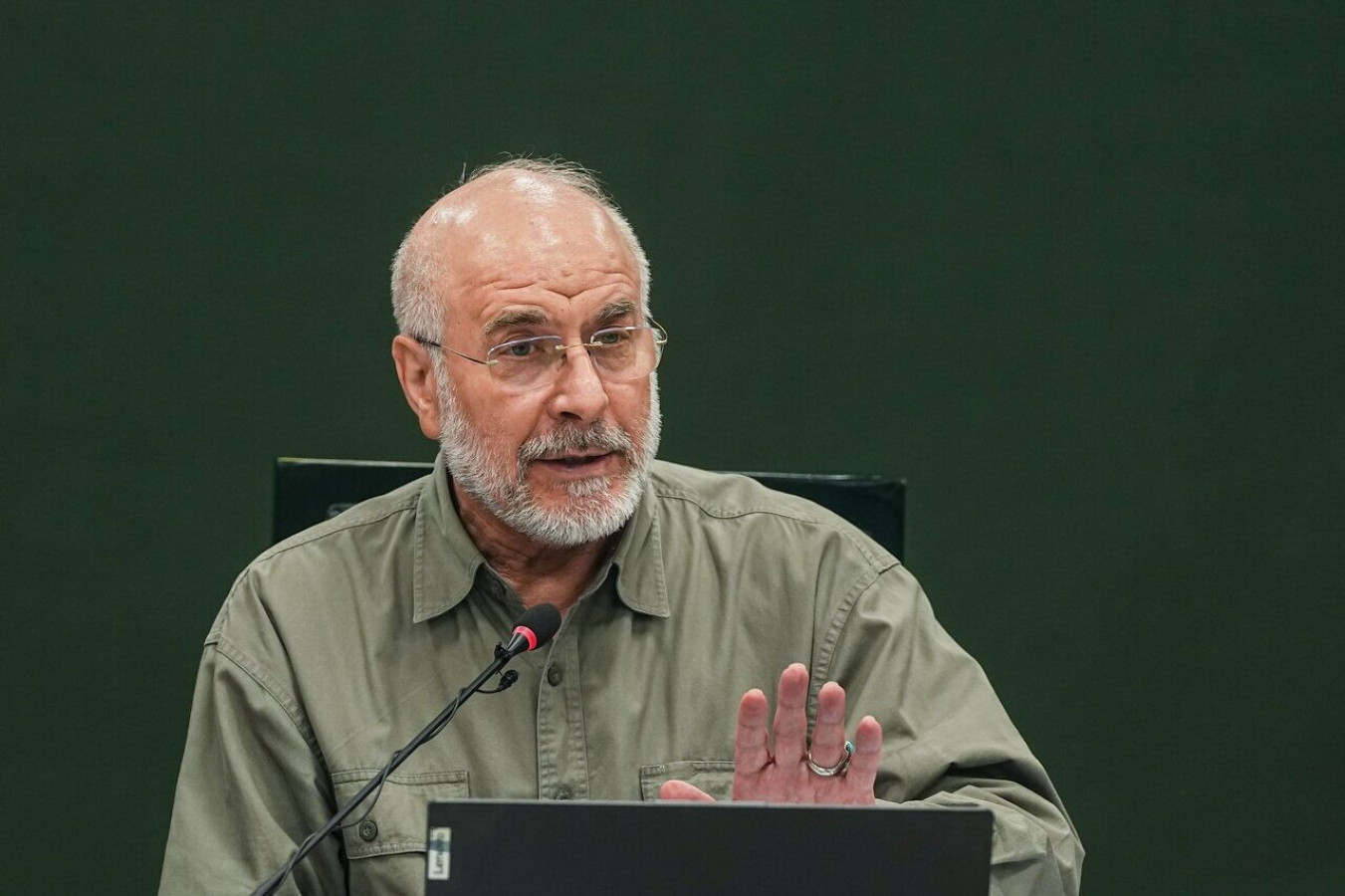
The US “must be penalised and made to alter its conduct,” Iranian Parliament Speaker Mohammad Bagher Ghalibaf said in a statement carried by IRNA on Thursday, adding that this must happen so the US “understands that it has to accept the Iranian nation’s rightful demands.”
Speaker @mb_ghalibaf: Regarding the proposal presented, as we’ve said before, the US president made promises and then broke them. America must be penalized and made to alter its conduct, so it understands that it has to accept the Iranian nation’s rightful demands. pic.twitter.com/vhNwTlbf0N
— IRNA News Agency ☫ (@IrnaEnglish) October 14, 2026
“Regarding the proposal presented…the US president made promises and then broke them.”
Ghalibaf said separately that Iran must combine military action with negotiations to establish lasting deterrence and prevent its enemies from launching further attacks, stressing that agreements alone cannot guarantee the country’s security, according to IRNA on Thursday.
Speaking in an interview late on Wednesday, Ghalibaf questioned whether negotiations with the United States, even if they resulted in a signed agreement containing Washington’s commitments, would prevent future attacks on Iran.
Iran must fight and negotiate to establish lasting deterrence: Speaker @mb_ghalibaf https://t.co/TTg5xeorUk pic.twitter.com/3feYy2UMDn
— IRNA News Agency ☫ (@IrnaEnglish) October 15, 2026
Ghalibaf also rejected the notion that Iran should rely only on military confrontation and escalating tensions to exhaust its enemies.
US hostility toward Iran was deeply rooted, he said, saying that Washington’s pursuit of domination and its hegemonic mentality only fueled further ambitions rather than prompting it to back down, according to IRNA.
“The solution is to fight and negotiate at the same time to establish lasting deterrence,” Ghalibaf said, outlining the approach needed to protect Iran against future threats.
He said Iran must become sufficiently powerful to convince the United States, as well as regional and international actors, that they cannot achieve their objectives against the country.
“No one should dare to attack us. Anyone who entertains such a foolish idea should look at experience and understand that Iran is powerful and that no one can stand against us or challenge us,” he said.
The parliament speaker emphasised that such deterrence required not only building military strength but also demonstrating that strength convincingly to potential enemies.
“Whenever we achieve a military victory on the battlefield, we must also turn that victory into a political victory, consolidate it and turn it into a document of defeat for the enemy,” he added.
Strait of Hormuz remains closed, requires coordination for passage: Iran
Deputy chief of the Iranian Army for coordination, Rear Admiral Habibollah Sayyari, said on Thursday that the Strait of Hormuz would remain closed and that any passage through the waterway must be coordinated with Iranian forces, according to IRNA.
Speaking to reporters on the sidelines of a ceremony honouring army nurses, Sayyari said the situation was evident from oil flows and rising gasoline prices in the United States.
Iran: Strait of Hormuz remains closed, requires coordination for passagehttps://t.co/YO2Q3NaR2r pic.twitter.com/OkvHiLXckc
— IRNA News Agency ☫ (@IrnaEnglish) October 15, 2026
He said the Islamic Revolution Guards Corps (IRGC) Navy maintained a strong presence west of the Strait of Hormuz, while the Iranian Army operated east of it, extending northward into the Sea of Oman.
If any passage takes place, it must be coordinated; otherwise, people will see in the news what happens, Sayyari said.
Sayyari said the continued efforts by countries to secure gasoline and diesel supplies showed that the strait remained closed.
US military weighs use of ‘mother of all bombs’ in potential future strikes on Iran, CNN says
The US military has developed strike plans that could include using the GBU-43/B Massive Ordnance Air Blast Bomb, also known as the “mother of all bombs”, against Iranian energy infrastructure and nuclear sites if President Donald Trump orders renewed combat operations, CNN reported on Thursday citing US officials familiar with the matter.
The potential deployment of the largest non-nuclear bomb in the US arsenal would mark a significant escalation in the conflict, although officials familiar with military planning discussions told CNN that questions remain over its effectiveness in achieving Washington’s strategic objectives.
Reuters could not immediately verify the report.
Trump says Iran war will end ‘very soon,’ predicts oil prices will plunge
US President Donald Trump said late Wednesday that the war with Iran would end “very soon,” predicting that oil prices would fall sharply once the conflict concludes.
“The Iran war will end very soon … Soon, as they want it to end,” Trump told reporters in Montana.
“They’ll never have a nuclear weapon, and oil prices will drop like a rock.”
Earlier, addressing a rally in Montana, Trump expressed uncertainty over which Iranian officials the US was negotiating with as Washington sought to end the conflict.
Read: Iran says reviewing US proposals for talks as indirect messages continue
“They don’t have a navy. They don’t have an air force. Their army is decimated. Their leaders are gone.
“I should have probably left their leaders because I don’t know who the hell we’re negotiating with,” he said.
The president also described Iran as having previously been a dominant military force in the Middle East, arguing that US military operations had significantly weakened its capabilities.
“Iran was the bully of the Middle East,” he said, adding that the country was no longer as powerful as it had been.
Trump claimed that US strikes had destroyed Iran’s naval fleet and rendered its military aircraft unusable.
He said Iran had 159 ships and asserted that none remained operational, while also claiming that its fighter jets had been destroyed on the country’s runways.
“You know, they were strong. Now they’re not so strong … I said ‘we knocked it out,’ but they had exactly 159 ships. How many ships are laying at the bottom of the sea? You know, 159. So they had 274 quite good, but not like ours, quite good jet fighters. How many jet fighters are available for use today? Zero! You know where they are? They’re all scattered all over the beautiful runways of Iran. They’re all scattered in little tiny pieces all over the runways,” he added.
Two ships sink near Hormuz after being hit by projectiles amid surge in attacks
A container ship and a dry bulk carrier have both sunk near the Strait of Hormuz in the past 24 hours after being hit by projectiles in separate incidents, maritime officials said on Wednesday.
Attacks around the waterway have surged over the past 10 days, with Iran saying it is stepping up strikes in response to the US blockade of its ports and tougher sanctions introduced last month.
The Singapore-flagged GFS Pride, a small container vessel with a capacity of 2,824 20-foot equivalent units (TEU), sank while sailing through the strait, according to maritime security sources.
“GFS PRIDE sustained damage and a fire on board, and has since sunk. All 21 crew members were safely evacuated. No injuries have been reported,” the Maritime and Port Authority of Singapore (MPA) said in a statement on Wednesday, adding that the vessel had been sailing through the strait on Tuesday.
In a separate incident, the Antigua and Barbuda-flagged Cape Dao sank close to the strait, weeks after being struck by a projectile on September 23, data from UN shipping agency the International Maritime Organisation showed on Wednesday.
Read more: Strait of Hormuz traffic plunges once again amid new wave of Houthi attacks
One crew member was killed, and the rest of the crew evacuated straight after the strike, maritime sources said.
Its UAE-based manager, Peonies Shipmanagement FZE, could not be immediately reached for comment.
The GFS Pride and Cape Dao are the second and third vessels to have sunk since the US-Iran war began on February 28, according to an analysis of IMO casualty data.
“MPA is deeply concerned about the continued attacks on commercial shipping in the Strait of Hormuz,” the Singapore authority said.
“Such attacks are unprovoked, unjustifiable, and a breach of international law.”
GFS Pride’s United Arab Emirates-based manager, GFS Ship Management FZE, could not be immediately reached for comment.
“The latest incidents reinforce the continuing threat to commercial shipping transiting the Strait of Hormuz,” maritime risk management company MARISKS said on Wednesday.
“The threat is not confined to tankers, with container vessels and bulk carriers also sustaining serious damage.”
Iran tightens grip
A sharp escalation in threats to commercial shipping in and around the Strait of Hormuz, through which about a fifth of global oil and liquefied natural gas trade passed before the war, has heightened concerns about security in the waterway.
Tehran has sought to tighten its grip on the waterway since US and Israeli strikes on Iran on February 28, restricting transit in an effort to gain leverage over Washington.
Iran is increasingly deploying new tactics against vessels transiting the strait as it seeks to keep oil prices elevated and influence US midterm elections, two senior Iranian officials told Reuters.
While Iran and the US have focused their attacks on tankers, cargo and container vessels have also been attacked, immobilised or sunk.
The Maltese-flagged container ship Safeen Prestige was hit by a projectile in March and later sank north of the Strait of Hormuz.
Iran’s Revolutionary Guards attacked and seized the container ship MSC Francesca in April.